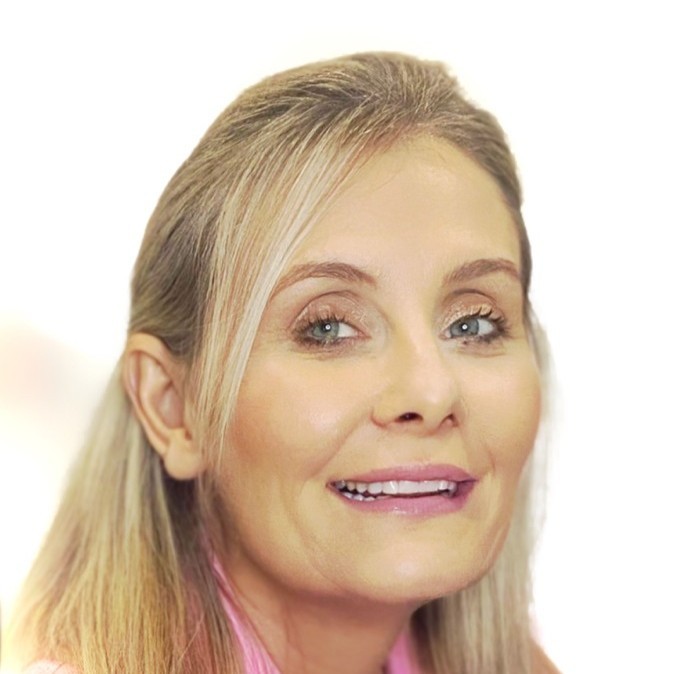
Most women I know rebuilding a business in their forties, fifties, sixties aren't starting fresh. They're starting over.
Sometimes from a divorce. Sometimes from a redundancy. Sometimes from caring for parents, or losing them, or losing someone else. Sometimes just from the slow, grinding realisation that the version of work they'd been promised at twenty-five isn't going to deliver them safely to retirement.
Loss is the doorway to most second acts — but nobody puts that in the brochure.
I built a fashion business once. Reversible handbags, patented design, sold across Australia, New Zealand, the UK and America. Twelve years. Seven figures. By any reasonable measure, it worked.
Then I was looking at my retirement balance one ordinary afternoon and realised I had a math problem nobody in business school had taught me to solve. I was sixty. The numbers still didn't work.
That was the moment.
Not a dramatic one. No epiphany on a beach. Just a quiet Tuesday, a screen full of numbers, and the knowing — the kind you can't unsee — that the next twenty years were going to look different from the last twenty.
I didn't want to start a business. I'd done that. I wanted to build the thing I'd needed back when I was running the fashion brand and didn't know existed: a marketing system that ran itself, in my voice, without eating my life.
So I started building it.
The thing nobody tells you about doing your own marketing
When I ran the fashion business, marketing was the part I did at 9pm. Or 5am. Or on planes between countries. Or — and this is the honest version — not at all, for weeks at a time, while I told myself I'd "catch up next week."
I knew it mattered. I knew the brand depended on it. I had years of strategic experience and I'd built businesses before. I just couldn't add another forty hours a week to my schedule to be the marketing department.
So I did what every founder does. I hired freelancers who didn't sound like me. I tried tools that promised to write in my voice but produced content I'd never have signed off on. I paid for courses that taught me how to build a content engine — except the content engine still required me to be the engine.
By the time I closed the fashion business, I'd spent a decade learning one thing very clearly:
Marketing systems built for founders don't actually take the work off the founder. They just give her a new dashboard to feel guilty in front of.
The "with help" part
When I started building what would become Seize the Yes, AI was already everywhere. Everyone was promising to turn AI into your "personal assistant," your "growth team," your "second brain."
Most of it was nonsense. The output was generic, the voice was wrong, the tone was either too corporate or too caffeinated. You could spot AI-written content at fifty paces. Worse — you could feel the woman behind it, hiding.
The thing I wanted didn't exist. So I built it.
The system has two parts, and both matter.
The first is a stack of specialist AI agents. Ten of them. Each one good at exactly one job — drafting, researching, formatting, scheduling, analysing, optimising. They don't pretend to be human. They don't pretend to think for me. They do the heavy lifting underneath the content, the parts that drained me in the fashion years.
The second is a real person. We call her a Yesser. She runs the marketing for the week. She holds the relationship. She's the one who decides what goes out and when. She's not a "content manager" sitting in a ticket queue — she knows your business. She has the final yes on everything before it goes anywhere.
You — the founder — sit above both of them. You approve what matters. You don't touch what doesn't.
That's the system. AI as the engine. A real person as the driver. You as the woman who gets her life back.
The Australian thing nobody says out loud
Here's something else nobody puts in the brochure.
If you build something successful in Australia, you learn very quickly to stay quiet about it. Tall poppy is real. People love a good redemption arc but they don't love a woman who's clearly winning. There's a particular flavour of silent disapproval reserved for women over forty who do well at things.
So most of us go quiet. We undersell. We deflect. We say things like "oh, it's just a little thing I'm doing" about businesses turning over real money. We make ourselves small so nobody can resent us for being big.
I did it for years.
Building Seize the Yes is — for me — a quiet refusal of that. Not a brash one. I'm not going to start posting Lamborghini photos. But I am going to stop pretending I haven't built things. I am going to talk publicly about money, about systems, about second acts, about what it actually takes to rebuild after sixty. Not because I want applause. Because the women I'm building this for need someone to break the silence first.
What a week looks like now
A week looks like this:
Monday morning, my Yesser sends a short note. Here's what's queued for the week. Here's what needs your eyes. Here's what we noticed in last week's numbers. Two questions for you.
I read it over coffee. I answer the two questions. I approve what needs approving. The whole thing takes me twenty minutes.
Then the week happens. Content goes out across the channels we agreed on. Leads come in. They get followed up. Bookings get made. The system runs.
I work on the things only I can work on. I have time to think. I have time to read. I have time to walk the dog and not feel guilty that I'm not "creating content" while I do it.
The marketing didn't stop. It just stopped depending on me.
That's the whole point of the system.
Who I'm building this for
If you've spent twenty years building expertise — in fashion, in coaching, in services, in care, in any field where what you know has real value — and you've watched that expertise stay invisible while younger founders with louder voices get the attention, this is for you.
If you've started over after a loss — any kind of loss — and you're looking at the next twenty years thinking "I cannot do this alone, but I refuse to hand it over to someone who doesn't understand what I've built," this is for you.
If you've been told tech isn't for you, or you've quietly told yourself the same thing, and you're tired of standing on the outside of the conversation, this is for you.
If you're a woman who's worked your whole life and is now looking at your retirement balance the way I looked at mine, and you've worked out that the math problem isn't going to solve itself, this is for you.
I built Seize the Yes because I needed it.
The fact that other women need it too — that's the whole reason it exists outside my own laptop.
— Jules